Intro to Humanities
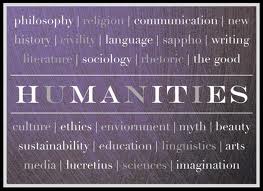
Humanities. I've chose to complete this course for my general education requirement in Spring of 2013. This course will provide me with a focus of our world as a global humanity. Concerning myself with what it means to be human and studying the thoughts and relations of humanity over time.
From this course I hope to gain a better understanding of what the state of our would is currently, where it came from, and how we got to where we are today.
Our topics of study are: Freedom, Responsibility, Justice, Identity, Privilege, Inequality, Morality, Sacredness, Spirituality, and the Experience of War.
On Communicating & Collaborating
Reflection:
Over the course of this class we have studied many different topics ranging from freedom and justice to identity and inequality, and from spirituality to war. At first glance these topics seem to be disjointed and perhaps out of place in a class together but I discovered that these topics are all actually interrelated and frequently reference and build off of one another. The concept of the various topics being as intertwined as they are brought a new and insightful way of looking at my surroundings and my other courses that opened my mind to be able to think more critically on my own. An example would be in our Spirituality module discussing the Muslim faith and reading some of the texts I discovered that their religion is not that far off from what we know of Christianity and Judaism and reinforces that what we are lead to believe by the media about Muslims apply only to a few radicals and not generally to the whole group. This was a perfect example of stereotyping and believing blindly the media portrayal and the texts provided my own knowledge of their values and beliefs.
Some of my work and really illustrates how this course has made me think critically and apply these though processes in my own life. The picture essay which was part of the Freedom, Responsibility, and Justice module’s adaptation project was really powerful and reflects some of the discussions we had as a class that are extremely meaningful to me. In addition to the adaptation project I just mentioned my review and response to the Mummies of the World exhibit at The Leonardo also illustrates the type of critical thinking and views. From a communicating and collaboration stand point the above mentioned work reflect an ability to communicate in meaningful and different ways. For collaboration the most collaborative assignment is the group magazine project. I was given the opportunity to be on the magazine focused on the Film genre and to work with a team of three other classmates and my role was editor-in-chief. As a group we met weekly on Tuesday evenings to discuss our progress and hash out any issues we may have encountered.
In our first meeting we came to an agreement on our thesis and also a title for our magazine: Lens of War. In our planning meetings it was decided that I would handle the review portion of our requirements. I asked my group which film they thought would be the best to review in order to meet our requirements and the answer was unanimously Glory; the resulting work is my review of the classic. In addition to the review each group member needed to write an analysis on how the genre communicates its messages. This analysis is the fourth such analysis for this course and as I also took English 1010 this semester it was my fifth analysis assignment, providing me plenty of practice analyzing the methods used by specific mediums. I use several different war movies to illustrate my analysis of how film communicates war.
As I mentioned previously this course taught me to better my critical thinking skills by stretching my understanding of the topics we studied with specific emphasis on holocausts, and religions. As an American society we mostly focus on the holocaust of WWII but overlook many of the more recent holocausts like Rwanda. With respect to the religion side of things the Muslim faith was discussed in both the identity and spirituality modules. The true meaning of the Hijab and the actual beliefs and values taught in the Quran are very different from the way that our mainstream media portrays them.
As a summary, this course has reinforced the need to explore concepts and especially stereotypes to determine your own stance and beliefs.Also this course through the use of the group magazine project taught or expanded the ability to work effectively with different personalities to accomplish a common goal and assist each other in our progress towards this goal. Those skills are paramount to our success in school moving forward as well as in the real world where we must work together as humanity for the betterment of humanity.
Analysis & Adaptation Projects
Believing in Truth,
Religious Ignorance Brings
Peace of Mind and Soul
Reflection:
This analysis and adaptation project was a little different in that I thought I knew which of the texts I wanted to discuss. The more I thought about it the more I determined that my original selection was too similar to my own beliefs to fulfill the role it would need to. After reviewing the materials we used in this theme I selected “The Streets of Ashkelon” by Harrison as I recalled being drawn into it while reading it.
By being drawn in I mean that I connected with some of the points that were made, specifically with regard to how the introduction of religion could cause so much confusion and even lead to murder among a people who were unfamiliar with it. The other interesting thing that I found about this text was that portions of it were similar to my own beliefs.
If we look at the world today and consider all of the confusion and conflict that introducing religion into any number of societies, particularly those that do not already understand a religion, might cause it is not hard to understand and sympathize with the Weskers of Harrison’s writing. There were even moments in my contemplation when I desired the simple knowledge based existence where faith and belief was not an issue.

|
Sacredness, Spirituality and Morality - Essay.pdf Size : 178.392 Kb Type : pdf |
As I read further and further into Harrison’s piece I found that the actions of the Weskers were very similar to what we read of some of the people in the scriptures of my religion. That is when confronted with the concept of faith or belief and knowing only truth and knowledge they desired proof or a sign, a miracle from God to prove to them his existence.
Later as I was discussing this project with my wife I related a summary of the story to her and when I got to the part where one of the Weskers dies from his injuries sustained from Garth her instant response was, “There is their sign.” That was something that had escaped me previously and certainly escaped them, but as the religion that Mark was teaching believes, God does not produce signs or miracles for reasons of proof but has been known to curse people for their requests.
As for the Haiku, I chose to do another Haiku not because they are easy, for I assure you they are not, but because I find the Haiku a formidable medium, one that allows the author to delicately select their words (that’s the difficult part) to summarize their point while providing the reader enough flexibility to absorb what they need from the meaning they perceive. This haiku is the product of several hours of thought and word play. It was ultimately written from the middle down while at the dinner table discussing religion and the impact of organized religion versus the knowledge and good deed based concept of Atheism and the Weskers.
Over this whole theme it was refreshing to see that the underlying message was to treat all with respect and love while pursing knowledge and bettering humanity.
|
|
Identity, Privilege and Inequality - Essay.pdf Size : 200.236 Kb Type : pdf |
Reflection:
This project and analysis was somewhat of a struggle for me, not for material by any means but in attempts to put my words to paper. I originally though, Great I’ll do this one on Darling!, and then I got to thinking about how I would analyze that and which aspects of it I would include in my analysis and I discovered that I did not feel as though I could fit it in nor express it adequately. Next I considered Glory, a film that I had not seen prior to this class, and again I was met with, what would you analyze, and do you feel that there is enough material to meet the requirements for the analysis and still be able to do an adaptation. I reviewed the list of accepted material again and again. Finally I came to rest on Virginia Woolf’s Professions for Women. It was a piece that had resonated with me well enough and I thought I could do a fair job of discussing the elements that drove home her points.
Getting into the analysis was not terribly difficult though I found myself wondering what other sources I would use to enforce the points. Then I remembered a documentary on the creatures of Harry Potter that my wife and I had watched recently. You may ask yourself, how is Harry Potter related to Professions for Women? Well easily it is written by a woman, who as my luck would have it was told by her publishers that she should another initial to her pen name so as to mask her gender from young boys. What a fabulous example that demonstrates one of the points that Woolf discusses. I needed still other evidence besides Woolf’s own ideas to buoy up my analysis and so I went in search of other sources to agree with Woolf. I found in my search many willing to discuss the history of women in the workplace, some offering explicit essays written by men about why women should not be in the workplace and what exactly their place should be. All of which further enforced the need for Woolf’s speech and the support she provided with it to the women of the world.
House Angel am I?
Working, out in the man's world
The Angel must die.
After completing my analysis, I next set out on the adaptation project. I spent several hours contemplating what to include and what genre I would attempt to morph Woolf’s work into. My mind came to rest on poetry and I began to think of how to best frame the poem. Thinking of my options and the material I selected a Haiku and then came what was perhaps the most difficult part, selecting the most important parts of the work and determining how to make them fit into a Haiku. The items from the speech that stood out most to me and would need to be included were the stereotypes summed together in the being that is the Angel in the House or in my poem a House Angel, the desire to overcome those stereotypes and find equality in the working world of men, and the subsequent need for the death of the House Angel.
|
|
A Dream Forgotten - Picture Essay - Online.pdf Size : 1026.731 Kb Type : pdf |
Reflection:
For this analysis and adaptation projected I selected Langston Hughes’ “Let America be American Again.” I chose this particular text because I believe that our current American has strayed so much from the “American Dream” and from what our founding fathers intended our great country to be and I feel that Langston Hughes has captured exactly that with this poem. In analyzing this particular work I read the piece over many times waiting for inspiration on how to start and what type of adaptation I should create. The more I read the poem the more I saw picture after picture in my head especially at the lines, “America never was America to me.” I decided, since pictures are worth a thousand words that I would create a photo essay comprised of public domain photos and the words of Hughes’ poem.
For my analysis paper I simply had to tape into my already passionate love for our country and my fear and frustration at what is has become and continues to become though I think we have made steps in some recent elections to reclaim our country for the people. I found throughout my writing and my photo essay that I was able to draw connections to my political science class from last semester and that several of the documents I used as supporting evidence in my analysis were also covered in that class, things like The Declaration of Independence authored by Thomas Jefferson.
|
|
Freedom, Responsibility, Justice Analysis - Essay.pdf Size : 384.637 Kb Type : pdf |
From digging further into Langston Hughes’ work for this project I discovered how much more I get from reading works like this multiple times, and not always starting at the beginning when I reread something but maybe only reread a part I want to more fully understand. I discovered in “Let America be America Again” that Hughes’ didn’t leave a single person out. He covered everyone: white, black, Native American, immigrant, farmer, worker, slave, the hungry, and the homeless. It hit me after reading that passage over and over that even though I knew in my heart and mind that this poem was written for every American, Langston Hughes had actually mentioned every American, not specifically of course but by group, in his work.
I also discovered something about myself. Knowing this project was coming up I was concerned because my life had become very busy in the past couple of weeks. I was having to work late at work and my wife and I were both having car troubles what we were trying to get sorted so I didn’t really feel like I had a lot of time to prepare for this project. But what I discovered is something that I have learned is a composition style of heavy planning. That is that though I don’t get started on a project right away in material means in my head I am reviewing my options and planning, extensively, the route and outline I think I want to take. This process of heavy planning actually seemed to make things a little easier for me because when I had the time, or made the time, to sit down and tackle the project I had a plan already formed in my head and was able to find material to fit that plan and apply it effectively. I also was a little frightened by the adaptation piece of this project but I found that once again the heavy planning in my head prior to beginning this project helps pace that right along too. I found myself reviewing Hughes’ work and then searching for specific pictures that I thought would be impactful along with his words.
Critical Response to Civil Disobedience Across the Globe
“Civil Disobedience” – 1849 – Henry D. Thoreau
What is government? Why do we follow and allow government? Is government just? I think all these questions are evident in Thoreau’s text. Particularly evident in such passages as “most governments are usually, and all governments are sometimes, inexpedient.”
This piece was written in 1849 during times when slavery was a major issue. The time when this was written will also help us in interpreting the language contained within as it likely will not be common but will sound foreign to us.
This I think was written for every American. Both those present in Thoreau’s time but also, perhaps more, applicable to us in our present day. I think Thoreau has some very pointed parts: “Must the citizen ever for a moment, in the least degree, resign his conscience to the legislator? Why has every man a conscience, then? He also calls some of the American population hypocrites and I think this stands true today, “The soldier is applauded who refuses to serve in an unjust war by those who do not refuse to sustain the unjust government which makes the war.”
“Public Statement” –April 1963 – Eight Alabama Clergymen
This letter to the public is designed as a plea, a solution or a hope for a solution in answer to the demonstrations happening in the street of Birmingham. In some way I think this letter may have been written to subdue the public back into a complacent nature of waiting for something to happen rather than following Thoreau’s advice from the above text and acting on it.
April 1963 in Birmingham, AL there was a sit-in conducted against racial segregation in the U.S. Dr. King and his staff had been requested to be present and aid in other demonstrations and were arrested on April 12th for “parading without a permit”. Knowledge of the events going on around the time this letter was written provides us with insight that helps us understand the point of view of the authors and may also bring to light any ulterior motives within the text.
The “Statement” was written for the citizen of Birmingham Alabama of all races and of all positions. It was a call for patience, and a request to come together and talk about what could or should be done.
“Letter from Birmingham Jail” – 1963 – Martin Luther King, Jr.
The letter was written in response to the above “statement”. It answers why “outsiders” where present in Birmingham, and why direct action is sometimes necessary. This text also outlines steps that are present prior to moving into a direct action state.
Dr. King wrote this letter while imprisoned in Birmingham Alabama. I find it extremely interesting in the author’s note that the letter began on the margins of the newspaper in which he first read the public statement, then continued on scraps of writing paper and finally concluded on pads of paper his attorneys were eventually permitted to leave. We also know some of the events that had occurred during this time and we have read the public statement which this is in response to. This knowledge provides adequate structure for us to understand the meanings of Dr. King’s response.
While this text may have been directed specifically at the clergymen who authored the Public Statement it is also indirectly directed at all of us. I particularly like, “I am cognizant of the interrelatedness of all communities and states. …Injustice anywhere is a threat to justice everywhere.” I also like that he called these clergymen out on not addressing the underlying problem, of treating the symptom rather than the disease, if you will. “I am sure that each of you would want to go beyond the superficial social analyst who looks merely at effects, and does not grapple with underlying causes.”
“My Political Programme” – 1926 – Mahatma Gandhi
This text offers insight to the purpose, power, and education into the non-violent protest. It also defines civil-disobedience as a “terrifying synonym for suffering”.
This appears to be written in 1926 after Gandhi had success in South Africa, had moved back to India and was employing his non-violent tactics there as well. We are given, in the introduction some back ground on the types of discrimination and caste systems that Gandhi combated with and are hence provided a better understanding of the impact of this text and the ideas contained within.
I cannot tell and have been unable to locate if this text was delivered to the donors but I believe that this was not written solely for their benefit but also for the benefit of mankind. “Disobedience is a right that belongs to every human being and it becomes a sacred duty when it springs from civility, or, which is the same thing, love.” In short it is our duty to practice civil-disobedience in the face of injustices to bring about reformation.
“Eyes on the Prize” – Released 2007 – Mavis Staples
This song was written to answer the question of what to do when it seems things cannot possibly get any worse. The video certainly depicted some of the worst racial discrimination and brutality but the audio kept saying “Keep your eyes on the prize”.
Not sure if it was written in 2007 or if that is just the date of release. Either way that’s a powerful message especially when combined with the video. Knowing a bit about Mavis Staples’ history, born in Chicago in 1939, we know she lived through the era of Dr. King and saw civil-disobedience at its finest.
This message was written for all. I think the song is equally applicable to everyone as we all have our own goals that we’re battling for. Some obviously may not be as wide spread or as impactful as equal rights but the message to keep our eyes on the prize applies in daily life. One line that struck me was something to the effect of, the only chain we’ll stand for is standing hand in hand. What a great picture of unity. If only the whole world around could unity in common goals and agreement of Social Justice and Human Dignity.
“Soweto 1976: An Audio History"
– Aired: June 16th 2006 – NPR Radio DiariesThis aired on the anniversary of what was to be a peaceful demonstration of students protesting the governments mandate that classes be taught in a specific language. I don’t know that there is a question to be answered here as much as there is a remembrance of fighting for what you believed was right and just.
While this may have aired in 2006 it is more important to understand the history of 1976 in South Africa. We are provided with some of the facts in the audio. That the government had mandated that school classes were to be taught in Afrikaans and even the teachers were not sure how that would be possible. As a result students joined together in protest.
The piece, I think, was for the benefit of everyone. To get the knowledge, especially inside knowledge of people who were there, of people who were involved, of what it was like. The thoughts, feelings and actions of those young students, the bravery “especially from the girls” and then to have the unthinkable happen, “that anyone could have stood firm on their feet and actually shot into that crowd.” I said in a previous post with regard to the internment of Japanese-American’s, what government or country would do this to its own people. Our instructor pointed me to Apartheid in South Africa. I knew there would be other examples of this and I figured that they would be horrific but I suppose in my naivety I had also hoped that social justice and human dignity had a more prevalent place in our world history.
These texts and audio make me feel, proud of how far we have come, sad that we were ever so unjust to one another, and deeply concerned that perhaps how far we have come is just a façade. The thing that impacted me the most, was Dr. King’s statement that, “Injustice anywhere is a threat to justice everywhere.” and the thought that no one can go anywhere in a country of which they are a citizen and be considered an outsider. Those two concepts for me just really drove home the idea that we’re all connected that “what effects one directly affects all others indirectly.”
I don’t know that the ideas I was exposed to here in these passages changed my view of the world or my understanding of it. I would like to believe that I was a optimistic realist in my views of global humanity and as such found the events and ideas within unsurprising but nevertheless appalling. I would say that my opinion of when/if it is okay to break the law remains unchanged and is still primarily governed by a moral obligation. In a sense that if a law is passed that is unjust then it may be a moral obligation to break that law in order to bring about the negotiations to discover a just remedy. Such examples would be the many peaceful marches or sit-ins that were organized in conflict of segregation and lead to the imprisonment of many of those leaders such as Dr. King himself.
